Glossary·Written by a CPA
Share buyback
Also called: Stock repurchase
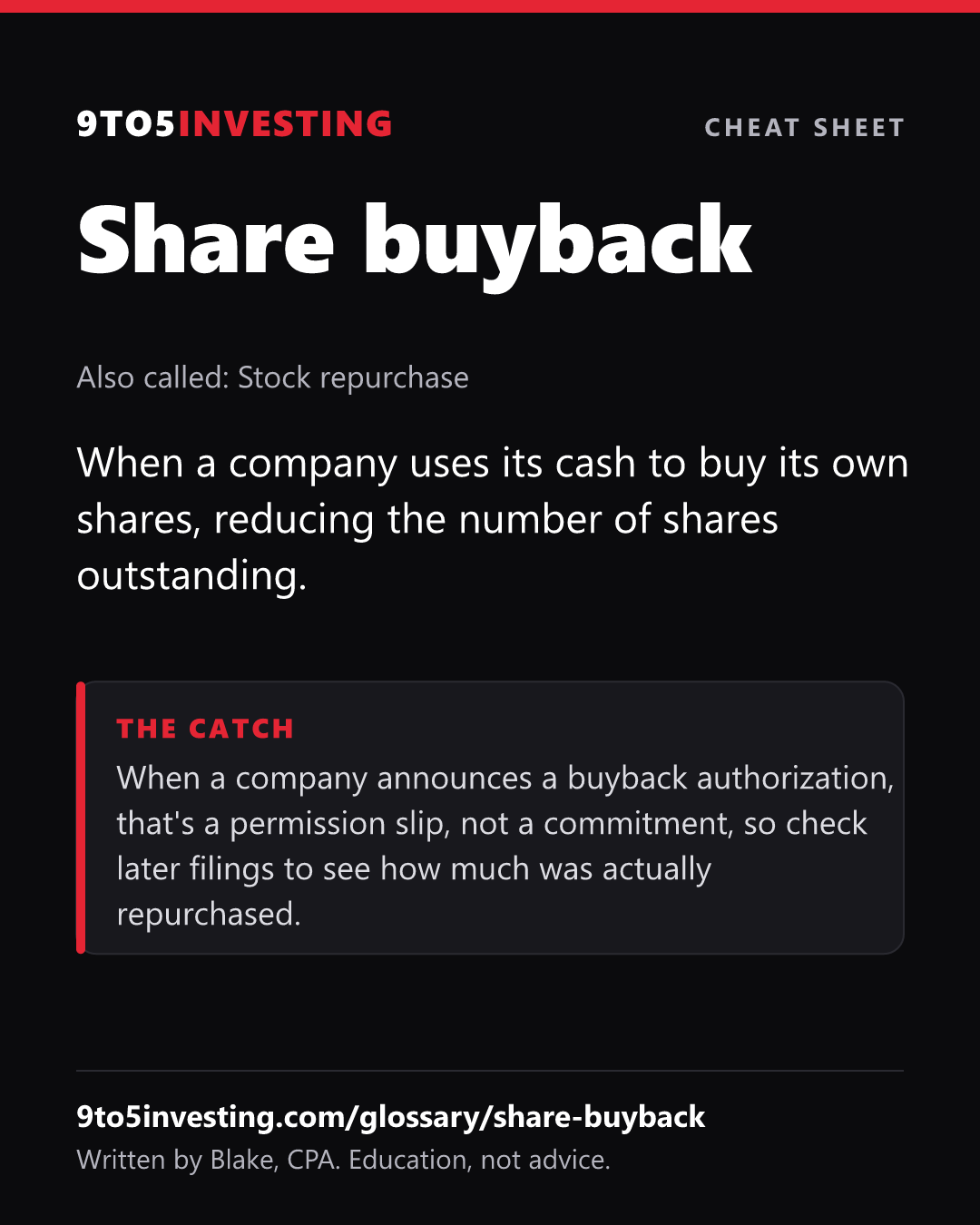
When a company uses its cash to buy its own shares, reducing the number of shares outstanding.
A share buyback is when a company buys back its own stock, which basically just means it's taking shares off the market. With fewer shares left, each remaining share owns a slightly bigger piece of the business.
It's a way of returning cash to shareholders, a bit like a dividend, except instead of sending everyone cash, it raises the ownership stake of the people who stay. Since 2023, US companies have also paid a 1% excise tax on the net value of shares they buy back.
For you, the questions are what price they're paying and whether the share count is actually going down. A buyback that only offsets new shares handed out to employees isn't really shrinking anything.
The catch. When a company announces a buyback authorization, that's a permission slip, not a commitment, so check later filings to see how much was actually repurchased.
Where I talk about it
Cheat sheet
Free to save and share. Tap the image to open it full size.
Related terms
This is education, not tax or investment advice. I'm a CPA, but I'm not your CPA. Full disclaimer.