Glossary·Written by a CPA
SPAC
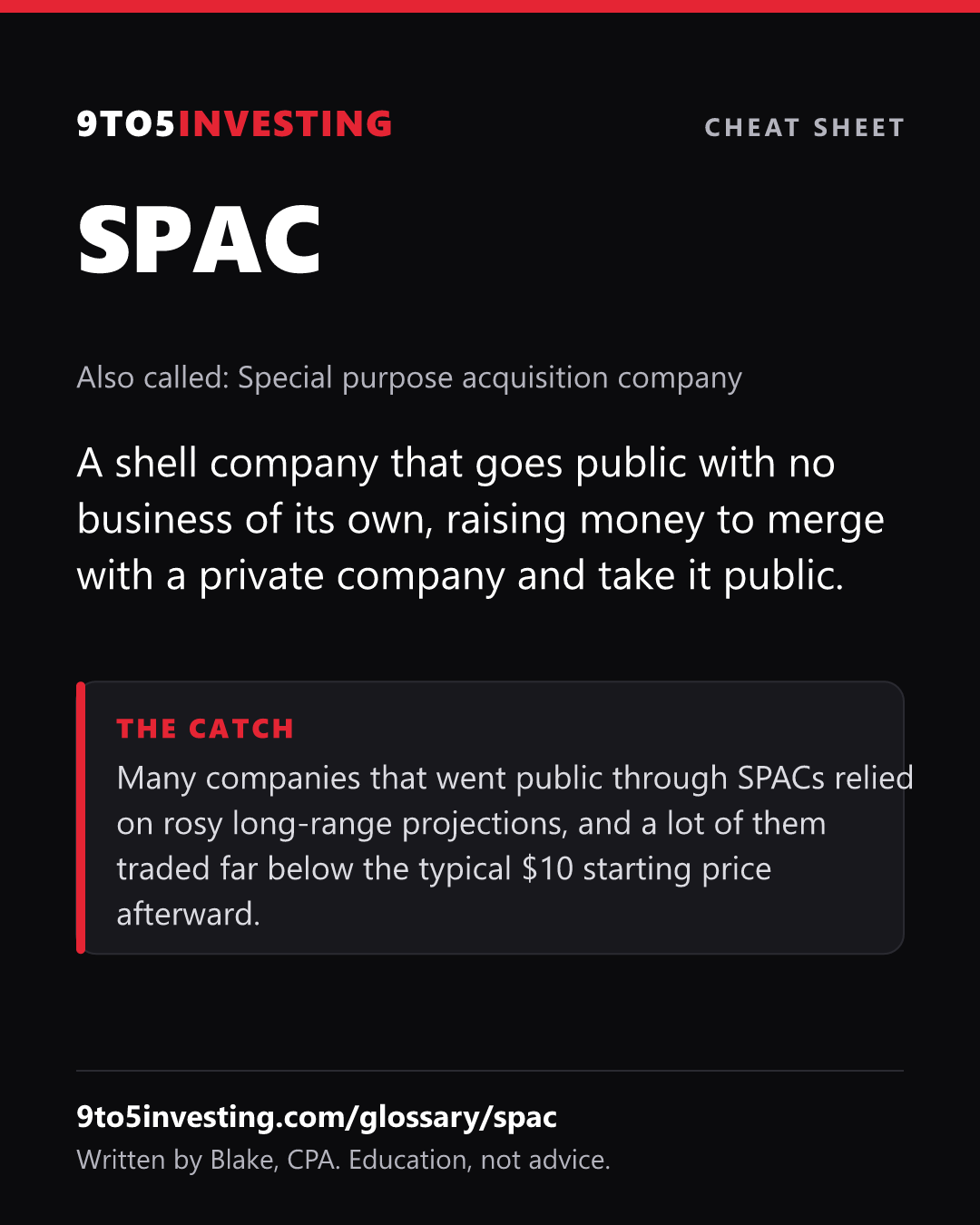
Also called: Special purpose acquisition company
A shell company that goes public with no business of its own, raising money to merge with a private company and take it public.
A SPAC, or special purpose acquisition company, is sometimes called a blank check company, which basically just means it raises money in an IPO with no actual operations, puts that cash in a trust, and then goes looking for a private company to merge with. When the deal closes, the private company ends up public without a traditional IPO.
SPACs usually have a deadline, often around two years, to find a deal, and shareholders typically get the choice to redeem their shares for their slice of the trust instead of staying in after the merger.
For you, the thing to understand is the cost built into the structure. The sponsors who create the SPAC usually get a big chunk of shares for very little money, often around 20% of the company's shares, and that dilutes everyone else.
The catch. Many companies that went public through SPACs relied on rosy long-range projections, and a lot of them traded far below the typical $10 starting price afterward.
Cheat sheet
Free to save and share. Tap the image to open it full size.
Related terms
This is education, not tax or investment advice. I'm a CPA, but I'm not your CPA. Full disclaimer.