Glossary·Written by a CPA
IPO and S-1
Also called: Initial public offering
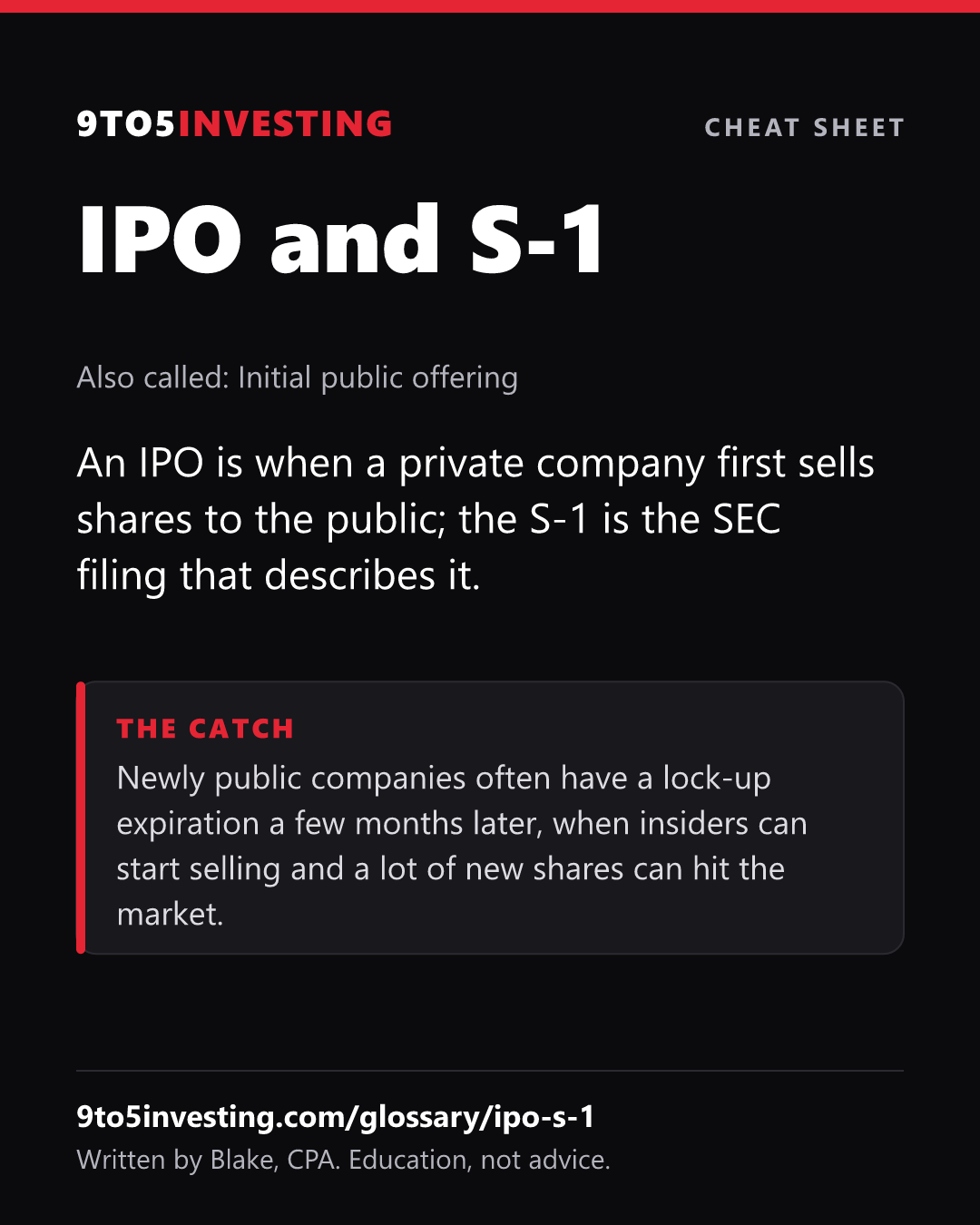
An IPO is when a private company first sells shares to the public; the S-1 is the SEC filing that describes it.
An IPO, or initial public offering, is when a private company sells shares to the public for the first time and starts trading on an exchange. Before that happens, it files an S-1 with the SEC, which basically just means it's the company's big introduction... the business, the financials, the risks and how the money raised will be used.
The S-1 is often the most detailed look you'll ever get at a company's history, and it includes things like who owns what, how much insiders are getting paid, and whether the founders keep special voting control.
For you, the IPO price is set by the company and its bankers for the big investors in the deal, and most regular investors only get to trade once it opens on the exchange, often at a different price.
The catch. Newly public companies often have a lock-up expiration a few months later, when insiders can start selling and a lot of new shares can hit the market.
Where I talk about it
- Don't Buy the Next Big IPO Until You Check These 7 Things at 0:14
- Anthropic IPO- Opportunity of the Year or AI Bubble? at 0:08
- Wall Street Says This $2 AI Power Stock Is Worth $16. I Checked Who Said It. (FRMI) (Fermi Stock) at 0:19
- SpaceX Stock: What Changes on December 8? at 0:00
- TSLA vs SPCX: Which Stock Should You Own? at 4:43
- Anthropic Just Filed for Its IPO—How Big Is the Opportunity? at 0:00
- Uber Stock Analysis┃Buy or Sell in 2020? at 0:18
- Tesla Stock Analysis- Is Tesla Stock (TSLA) Still a Buy at ALL-TIME Highs? at 1:26
Cheat sheet
Free to save and share. Tap the image to open it full size.
Related terms
This is education, not tax or investment advice. I'm a CPA, but I'm not your CPA. Full disclaimer.