
Glossary·Written by a CPA
Lock-up expiration
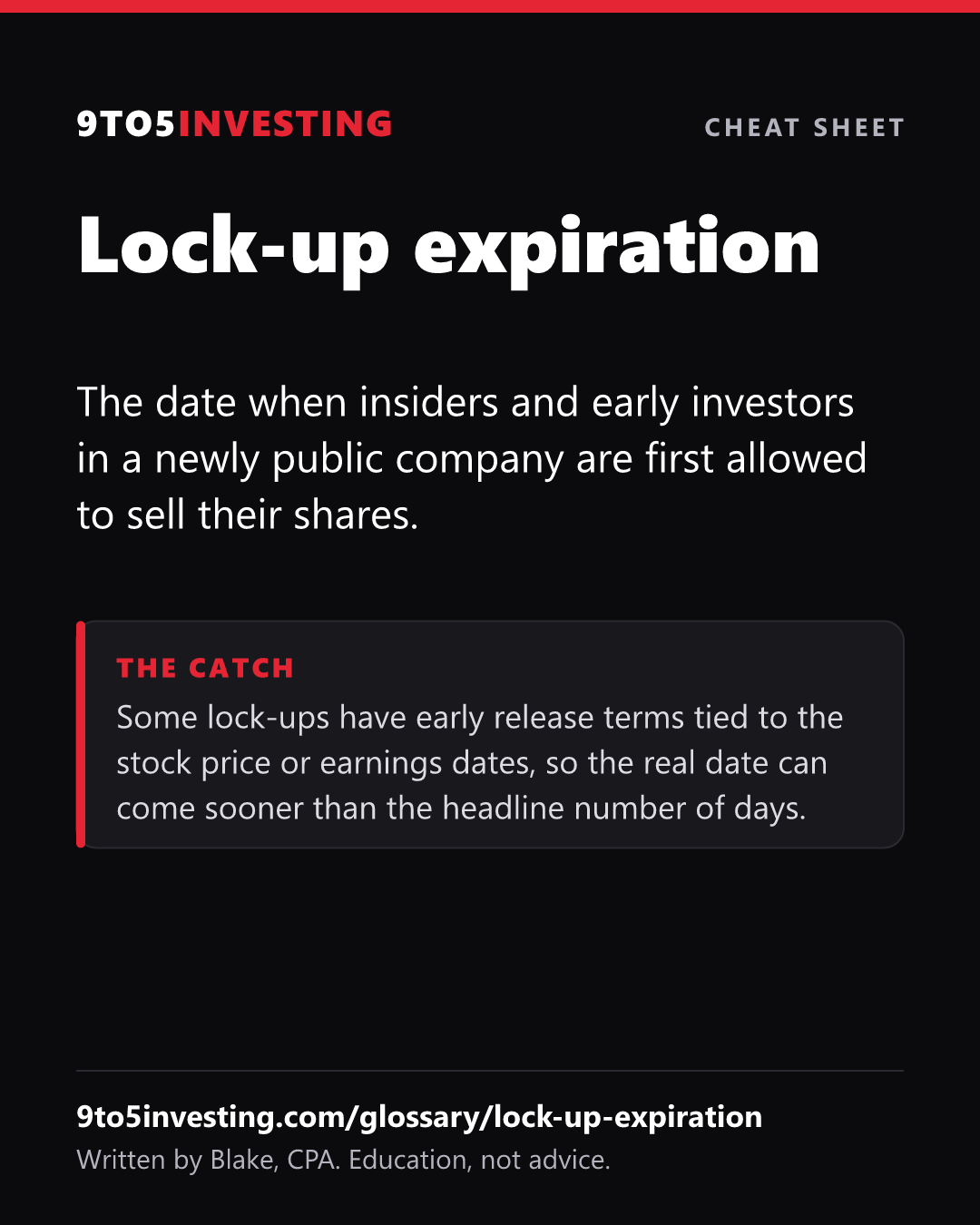
The date when insiders and early investors in a newly public company are first allowed to sell their shares.
When a company goes public, insiders and early investors usually agree not to sell their shares for a set period, often around 90 to 180 days. The lock-up expiration is basically just the day that agreement ends.
It's like a dam with a scheduled opening. Nothing forces anyone to sell, but a lot of shares that couldn't trade before suddenly can.
For you, the date is usually disclosed in the S-1, so it isn't a surprise, but stocks sometimes see extra selling pressure around it, especially if early investors are sitting on big gains.
The catch. Some lock-ups have early release terms tied to the stock price or earnings dates, so the real date can come sooner than the headline number of days.
Where I talk about it
Cheat sheet
Free to save and share. Tap the image to open it full size.
Related terms
This is education, not tax or investment advice. I'm a CPA, but I'm not your CPA. Full disclaimer.