
Glossary·Written by a CPA
10-K
Also called: Annual report
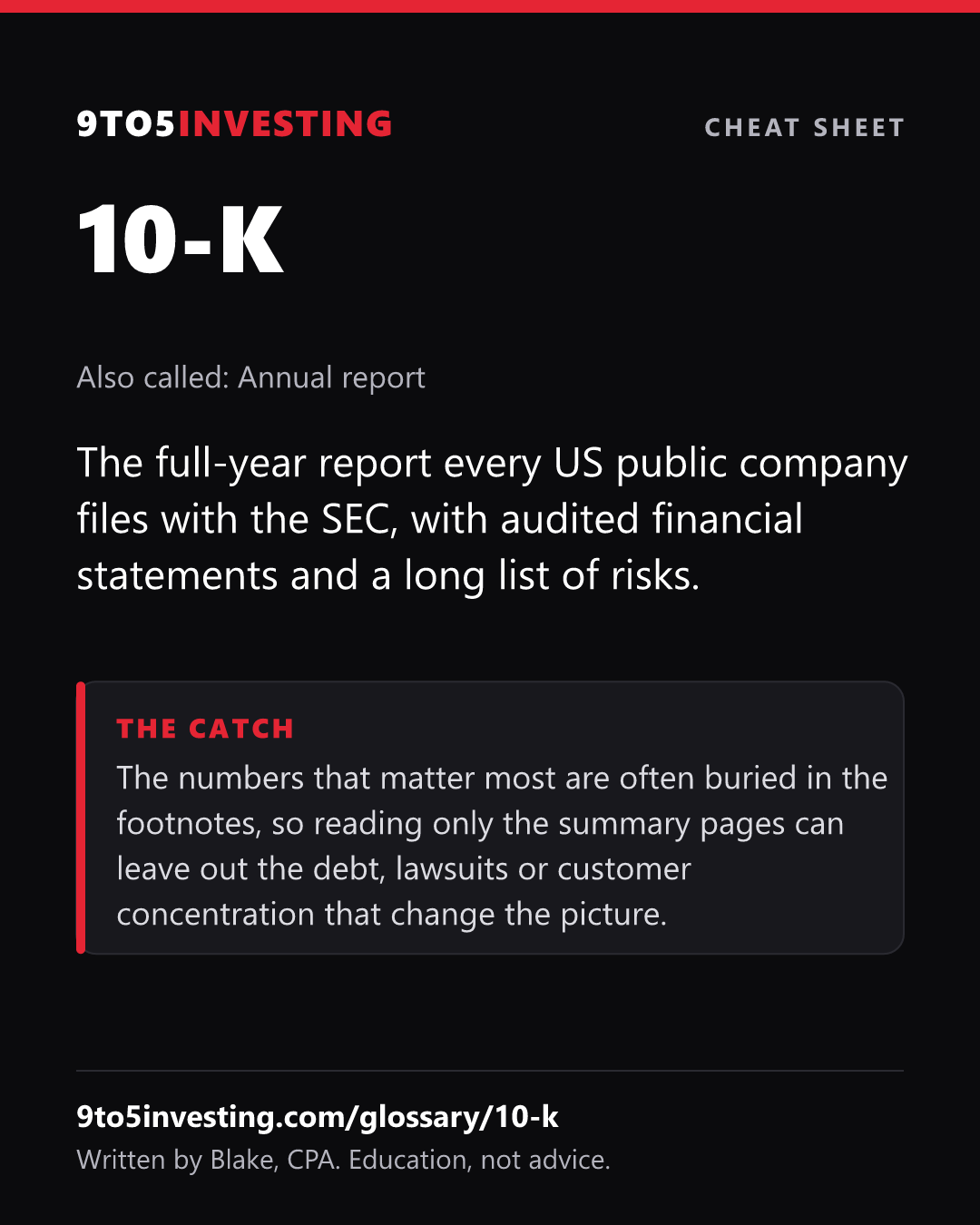
The full-year report every US public company files with the SEC, with audited financial statements and a long list of risks.
A 10-K is the annual report a public company files with the SEC, which basically just means it's the big, once-a-year rundown of the whole business... what it does, how it makes money, what could go wrong, and the full set of financial statements, which have been audited by an outside accounting firm.
It's long and it's dry, and that's kind of the point. The glossy investor slides are marketing, but the 10-K is the document the company's lawyers and auditors actually sign off on, so the honest stuff tends to live here, in the risk factors, the footnotes and the section called management's discussion and analysis.
For you as an investor, you don't have to read the whole thing cover to cover. Even just skimming the risk factors, the revenue footnote and the debt footnote will usually tell you more than a dozen headlines will.
The catch. The numbers that matter most are often buried in the footnotes, so reading only the summary pages can leave out the debt, lawsuits or customer concentration that change the picture.
Where I talk about it
Cheat sheet
Free to save and share. Tap the image to open it full size.
Related terms
This is education, not tax or investment advice. I'm a CPA, but I'm not your CPA. Full disclaimer.