
Glossary·Written by a CPA
PEG ratio
Also called: Price/earnings-to-growth
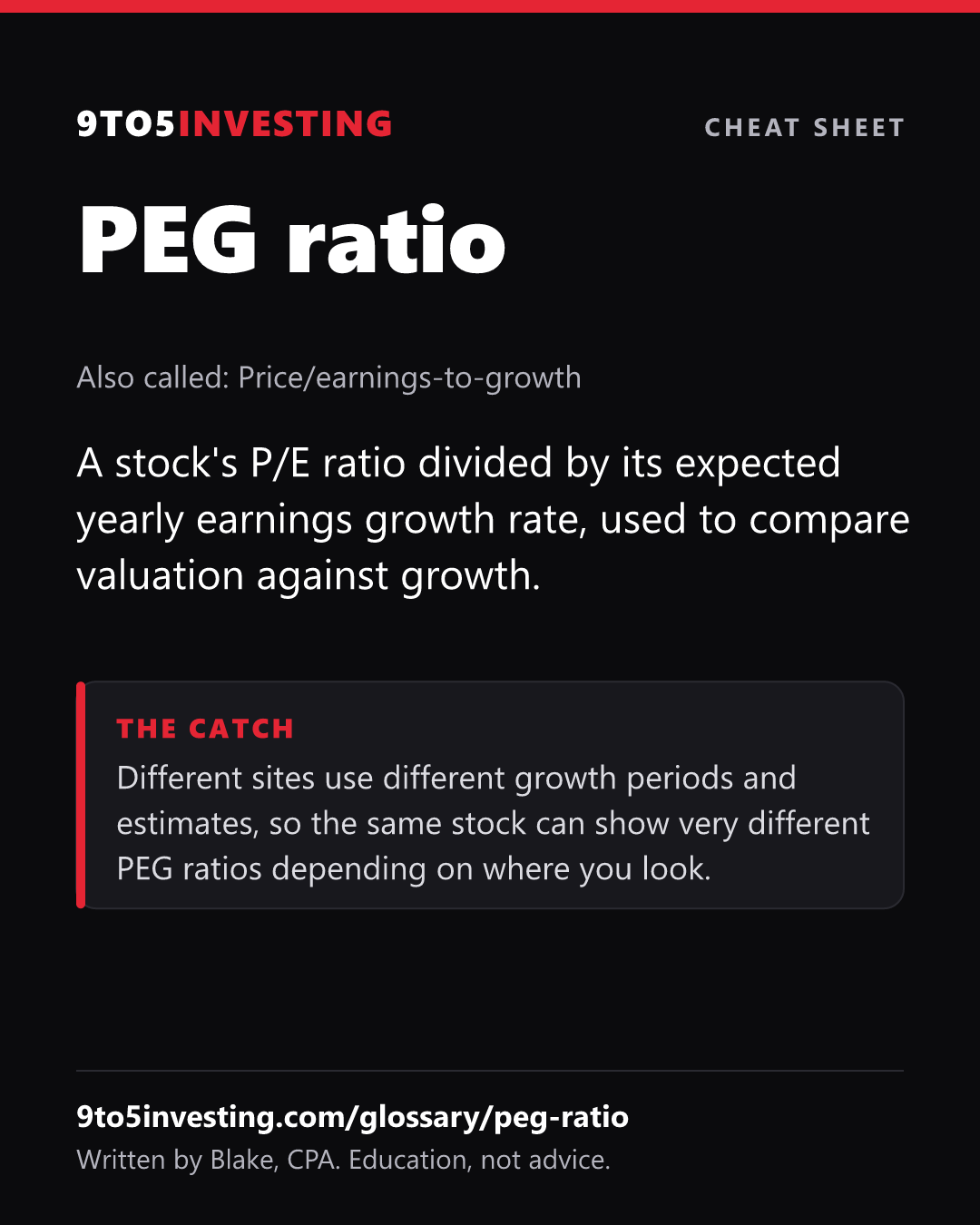
A stock's P/E ratio divided by its expected yearly earnings growth rate, used to compare valuation against growth.
The PEG ratio takes the P/E and divides it by the expected earnings growth rate, which basically just means it adjusts the P/E for how fast the company is expected to grow. The growth rate is used as a whole number, so 20% growth becomes 20.
The idea is that a P/E of 40 might be reasonable for a company growing 40% a year, but not for one growing 5%. A PEG around 1 is often treated as a rough rule of thumb for fair, though that's more tradition than science.
For you, it can be a quick way to compare growth companies, as long as you remember the growth number is someone's estimate.
Example. As an example, say a stock has a P/E of 30 and analysts expect earnings to grow 15% a year. The PEG ratio is 30 divided by 15, which is 2.
The catch. Different sites use different growth periods and estimates, so the same stock can show very different PEG ratios depending on where you look.
Where I talk about it
- NVIDIA Stock Analysis (NVDA)- The Best Artificial Intelligence Stock? at 9:28
- Microsoft Stock Analysis (MSFT)- A Buy at ALL TIME Highs (2020)? at 6:44
Cheat sheet
Free to save and share. Tap the image to open it full size.
Related terms
This is education, not tax or investment advice. I'm a CPA, but I'm not your CPA. Full disclaimer.