
Glossary·Written by a CPA
Implied volatility
Also called: IV
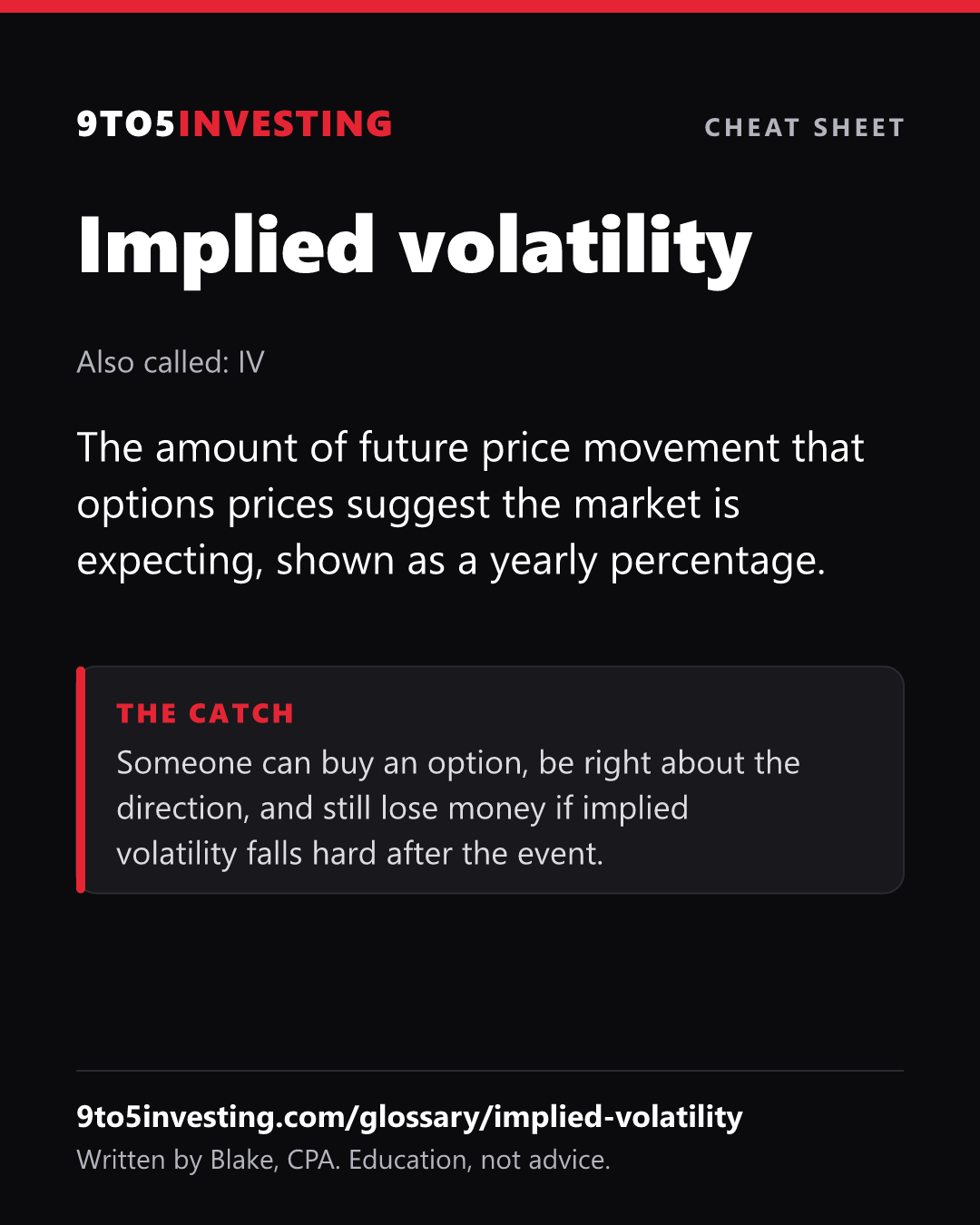
The amount of future price movement that options prices suggest the market is expecting, shown as a yearly percentage.
Implied volatility comes from options prices, and it basically just means how much the market expects a stock to move going forward. When people expect big swings, options get more expensive, and implied volatility goes up.
It usually climbs before events like earnings and then drops off sharply right after, once the news is out. People call that drop IV crush.
For you, implied volatility is helpful even if you never trade options, because it gives you a sense of how big a move the market is bracing for around an event.
The catch. Someone can buy an option, be right about the direction, and still lose money if implied volatility falls hard after the event.
Cheat sheet
Free to save and share. Tap the image to open it full size.
Related terms
This is education, not tax or investment advice. I'm a CPA, but I'm not your CPA. Full disclaimer.